
IM2G08D2DBBG-25

Intelligent Memory
822-IM2G08D2DBBG-25
IM2G08D2DBBG-25

Herst.:

Beschreibung:
DRAM DDR2 2Gb, 1.8V, 256Mx8, 400MHz (800Mbps), 0C to +95C, FBGA-60

ECAD Model:
Den kostenlosen Library Loader herunterladen, um diese Datei für Ihr ECAD Tool zu konvertieren. Weitere Infos zu ECAD-Modell.

Auf Lager: 374

Lagerbestand:
374 sofort lieferbar
Lieferzeit ab Hersteller:
26 Wochen Geschätzte Produktionszeit des Werks für Mengen, die größer als angezeigt sind.
Minimum: 1   Vielfache: 1
Stückpreis:
CHF -.--
Erw. Preis:
CHF -.--
Vorauss. Zolltarif:

Preis (CHF)

Menge Stückpreis
Erw. Preis
CHF 22.98 CHF 22.98
CHF 21.27 CHF 212.70
CHF 20.59 CHF 514.75
CHF 18.89 CHF 9 973.92

Produktattribut Attributwert Attribut auswählen
Intelligent Memory
Produktkategorie: DRAM
RoHS:  
SDRAM - DDR2
2 Gbit
8 bit
400 MHz
FBGA-60
256 M x 8
400 ps
1.7 V
1.9 V
0 C
+ 95 C
IM2G08D2
Tray
Marke: Intelligent Memory
Land der Bestückung: Not Available
Land der Verbreitung: Not Available
Ursprungsland: TW
Feuchtigkeitsempfindlich: Yes
Montageart: SMD/SMT
Produkt-Typ: DRAM
Verpackung ab Werk: 264
Unterkategorie: Memory & Data Storage
Versorgungsstrom - Max.: 58 mA
Gewicht pro Stück: 187 mg
Produkte gefunden:
Um ähnliche Produkte anzuzeigen, wählen Sie mindestens ein Kontrollkästchen aus
Um ähnliche Produkte in dieser Kategorie anzuzeigen, wählen Sie mindestens ein Kontrollkästchen oben aus.
Ausgewählte Attribute: 0

CNHTS:
8542329010
CAHTS:
8542320020
USHTS:
8542320036
MXHTS:
8542320299
ECCN:
EAR99

Dynamic Random Access Memory (DRAM)

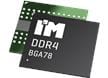
Intelligent Memory Dynamic Random Access Memory (DRAM) includes a full range of JEDEC-compliant DRAMs and ECC DRAMs (SDRAM, DDR, DDR2, DDR3, DDR4, LPDDR4). From an application's point of view, these components work like a monolithic device. The DRAM devices allow for maximum levels of memory density without altering existing board layouts or designs.

Double Data Rate 2 (DDR2) SDRAM

Intelligent Memory Double Data Rate (DDR2) Synchronous DRAM (SDRAM) are eight-bank devices that achieve high-speed data transfer rates. Interleaving the eight memory banks allows random access operations faster than standard DRAMs. A chip architecture prefetches multiple bits and then synchronizes the output data to a system clock. All control, address, and circuits are synchronized with the positive edge of an externally supplied clock. In a source-synchronous manner, I/Os are synchronized with a pair of bidirectional strobes. A sequential, gapless data rate is possible depending on the device's burst length, CAS latency, and speed grade.